
Services to your needs
ADAS Calibration
ADAS calibration keeps sensors precise so safety features work as intended.
Advanced Driver Assistance Systems (ADAS) ensure your vehicle’s safety technology performs with absolute precision.
Advanced ADAS calibration
What advanced ADAS calibration means
Advanced ADAS calibration is the precise process of aligning the cameras, sensors, and driver assistance systems fitted to modern vehicles. This ensures they function correctly after a windscreen replacement, repair, or other vehicle work.
These systems support vital safety features such as lane departure warning, emergency braking, traffic sign recognition, and forward-facing safety functions. Proper calibration guarantees that your vehicle’s safety technology performs exactly as intended — keeping it accurate, reliable, and fully compliant.
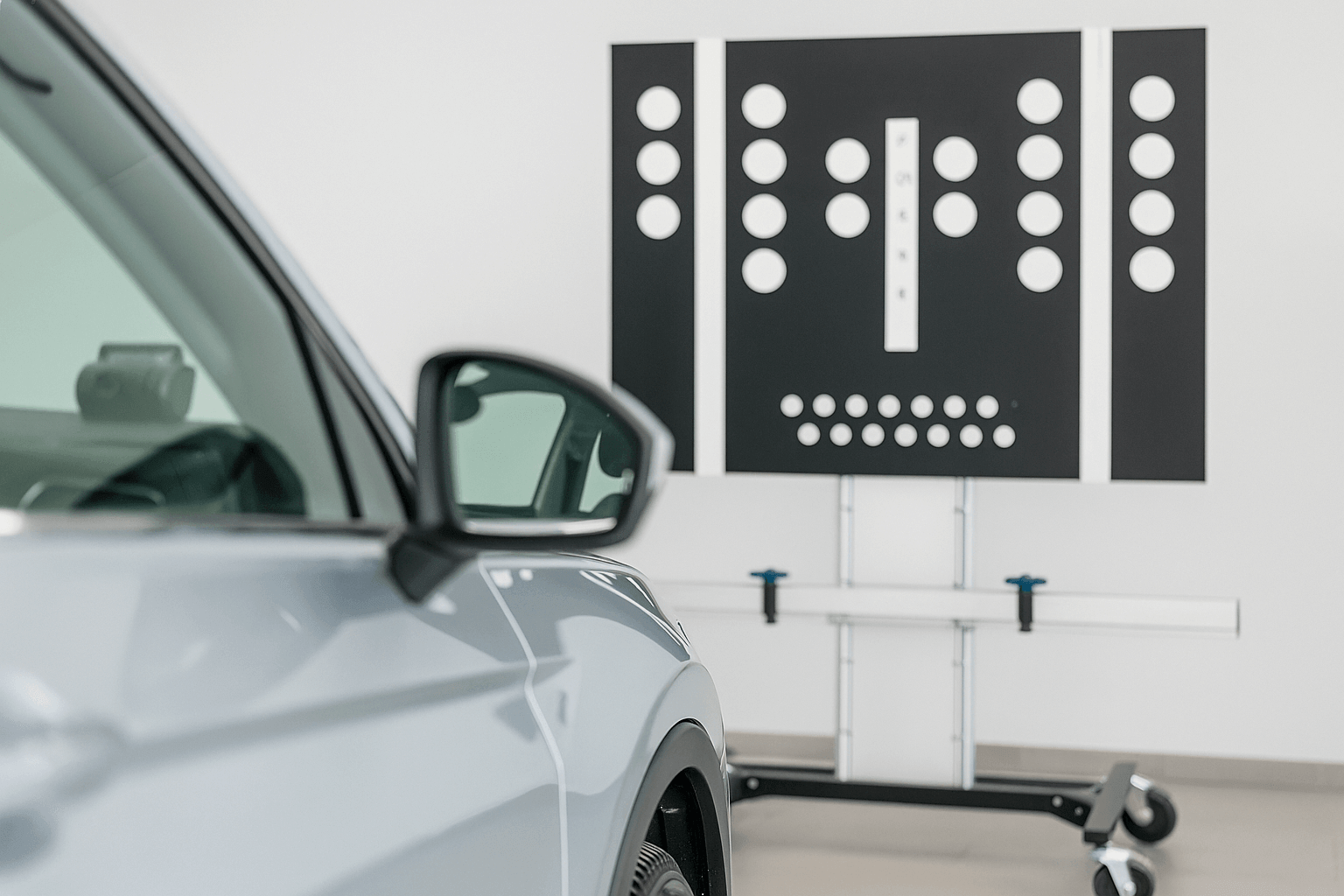

When calibration may be needed
When Calibration May Be Needed
ADAS calibration may be required after a windscreen replacement, certain repairs, suspension or alignment work, or whenever sensors and forward-facing cameras may have been affected. Even small changes in positioning can impact how these safety systems perform.
Correct calibration helps ensure your vehicle’s assistance systems continue to operate accurately, supporting safer driving and more dependable fleet performance.
Advanced driver assistance systems
Most Common Features
Modern vehicles rely on advanced safety systems designed to assist drivers, reduce risk and improve awareness on the road.
ADAS Technology
Advanced systems designed to enhance driver awareness, precision, and safety across every journey.
Collision Avoidance Systems
Detects potential collisions and alerts the driver, reducing accident risk through warnings or automatic intervention.
Lane Departure Warning
Monitors road markings and alerts the driver when the vehicle begins to drift out of its lane without signalling.
Adaptive Cruise Control
Automatically adjusts vehicle speed to maintain a safe, consistent distance from the vehicle ahead.
Blind Spot Monitoring
Uses sensors to detect vehicles in blind spots and provides visual or audible alerts to enhance lane-change awareness.
Automatic Emergency Braking
Applies braking automatically if a collision is detected and the driver fails to react in time.
Parking Assistance Systems
Guides steering, detects obstacles, and helps manoeuvre safely into tight spaces.